

Guarding the Skies – The Importance of Aviation Cybersecurity in India

Summarize this blog with :
Aviation cybersecurity in India is no longer just a backend IT concern; it is a critical pillar of national security, operational resilience and passenger safety.
As India continues to expand its aviation infrastructure, the industry is rapidly transitioning into a hyper-connected, digital-first ecosystem. Technologies like biometric e-gates, IoT devices, 5G networks, and automated Air Traffic Management (ATM) have improved operational efficiency while increasing digital connectivity. However, this rapid digitisation also expands the sector’s cyberattack surface. With access to large volumes of passenger data and interconnected critical systems, the Indian aviation sector faces increasingly sophisticated cyber threats.
The Threat Landscape: Why Aviation Cybersecurity Matters
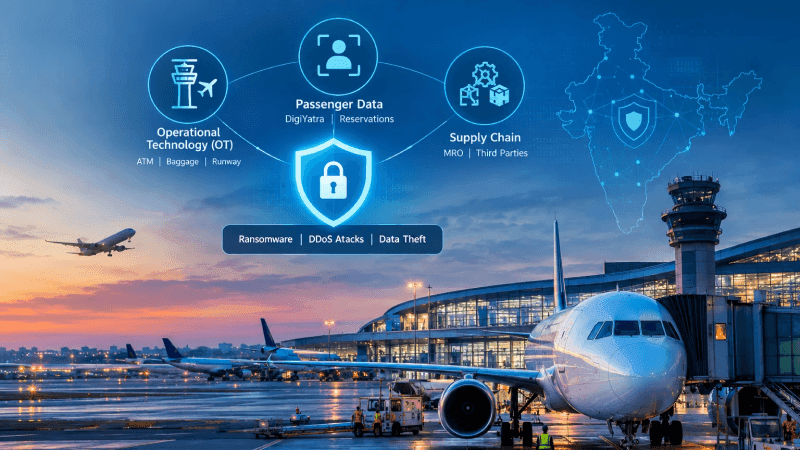
The aviation ecosystem relies on three interconnected pillars, each presenting an attractive target for cybercriminals using ransomware, Distributed Denial-of-Service (DDoS) attacks and data theft:
[Operational Technology (ATM/Baggage)] → [Passenger Data (DigiYatra/Reservations)] → [Supply Chain (MRO/Third Parties)]
These interconnected systems can be targeted through ransomware, DDoS attacks and data theft, potentially disrupting operations and exposing sensitive information.
1. Protecting Operational Technology (OT) and Flight Safety
Modern aircraft and airport infrastructure rely on extensive, continuous digital connections. Cybercriminals targeting Air Traffic Management (ATM) systems or exploiting satellite navigation vulnerabilities through Global Navigation Satellite System (GNSS) spoofing can manipulate or disrupt critical navigation data. A localised breach in an airport’s operational backbone affecting baggage handling, runway lighting or flight scheduling networks can trigger cascading disruptions, flight delays, financial losses and operational chaos.
2. Safeguarding Passenger Data and Digital Identity Systems
India’s digital aviation initiatives, such as DigiYatra, use facial recognition and digital identity technologies to streamline passenger processing. These systems, alongside airline reservation platforms and airport databases, handle sensitive personal information, making aviation organisations potential targets for data theft, extortion and other privacy-related attacks.
Under India’s Digital Personal Data Protection (DPDP) Act, 2023, and its applicable rules, organisations must address their obligations relating to digital personal data. Depending on applicable legal requirements and circumstances, a data breach can undermine passenger trust, damage an organisation’s reputation, and expose it to regulatory consequences.
3. Securing a Vulnerable Aviation Supply Chain
An aviation network is only as resilient as its interconnected vendors and partners. Cyber threats can also originate from third-party vendors, ground-handling agencies and Maintenance, Repair and Overhaul (MRO) providers. For instance, a ransomware attack targeting an aviation parts supplier or logistics IT provider can disrupt connected operations, delay maintenance activities and affect aircraft availability.
The Indian Regulatory and Governance Landscape
Aviation cybersecurity in India requires coordination between aviation regulators, government cybersecurity agencies and airport operators. Key considerations include:
Regulatory Oversight: The Bureau of Civil Aviation Security (BCAS) establishes and oversees civil aviation security requirements, while the Directorate General of Civil Aviation (DGCA) regulates civil aviation safety and related operational matters. CERT-In also plays a role in India's wider cybersecurity incident response framework.
Critical Infrastructure Protection: Under Section 70 of the Information Technology Act, 2000, specific computer resources may be designated as Protected Systems when notified by the appropriate government. Certain Airports Authority of India (AAI) air traffic management systems and specified airport operational systems have received such designations.
Security Standards and Audits: Airport operators and aviation stakeholders must address applicable security requirements, conduct risk assessments and strengthen controls across operational and IT environments. Relevant International Civil Aviation Organisation (ICAO) standards and national regulatory requirements provide important reference points for aviation security governance.
Core Strategies to Strengthen Aviation Cybersecurity
To stay ahead of evolving cyber threats, Indian airports, airlines and aviation service providers should prioritise the following security measures.
1. Implement Zero Trust Architecture
Zero Trust Architecture (ZTA) helps strengthen aviation network security by requiring continuous verification of identities, devices and access requests. Aviation organisations should enforce least-privilege access, strong identity verification and Multi-Factor Authentication (MFA) across relevant systems from customer-facing check-in kiosks to sensitive backend flight operations platforms.
Access to critical systems should also be segmented and monitored to limit unauthorised movement between IT and Operational Technology (OT) environments.
2. Deploy Integrated Defence and Centralised Security Monitoring
Siloed security systems create dangerous blind spots. Airports and airlines should integrate security monitoring across IT infrastructure and operational technology (OT), supported by a centralised Security Operations Center (SOC).
A well-equipped SOC can provide 24/7 monitoring, correlate security alerts and help security teams identify and investigate suspicious activity. Integrating relevant logs, threat intelligence and incident response workflows can improve visibility and reduce the time needed to detect and contain cyber threats.
3. Conduct Proactive Threat Simulations and Incident Response Drills
Preventive controls alone are not enough; aviation organisations must also test their ability to respond to cyber incidents. Regular threat simulations, penetration testing where appropriate, tabletop exercises and incident response drills can help identify gaps in security controls and operational recovery plans.
Exercises should cover scenarios such as ransomware infections, compromised vendor access, navigation-system interference and passenger-data breaches. Testing these scenarios helps organisations improve incident coordination, minimise downtime and restore critical services safely.
Conclusion: Building a Cyber-Resilient Aviation Ecosystem
As India’s aviation sector becomes increasingly digital, aviation cybersecurity must evolve alongside infrastructure and operational growth. Protecting passenger data, securing critical operational technology and managing third-party risks are essential to maintaining trust, continuity and safety.
A risk-based approach combining Zero Trust Architecture, continuous security monitoring, regulatory compliance and tested incident response plans can help airports, airlines and aviation partners strengthen their cyber resilience. Securing the skies requires more than protecting individual systems; it requires a coordinated effort to safeguard the interconnected digital ecosystem that keeps aviation moving.