
Demystifying CASB in Cyber Security: A Comprehensive Guide

Summarize this blog with :
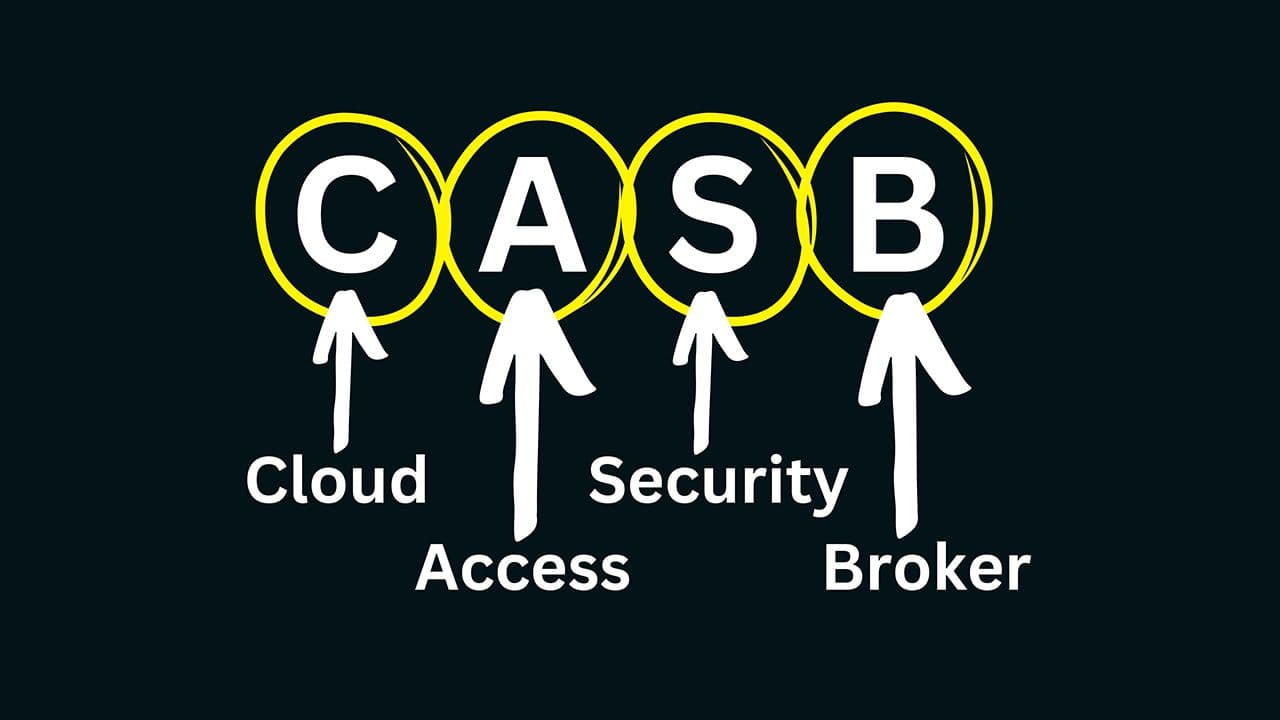
In the rapidly changing online world, protecting cloud data is crucial for businesses. A CASB (Cloud Access Security Broker) emerged as a vital tool in this realm. They serve as gatekeepers, enforcing security policies and safeguarding data and systems in the cloud environment, regardless of the device or location.
By understanding the complex security mechanisms of CASB cyber security, organizations can strengthen their cybersecurity posture and preserve the integrity of their cloud data. Delve deeper into this article to get a comprehensive overview of CASB.
Understanding CASB
The significance of cloud technology in corporate operations has experienced a rise in recent years. While utilizing cloud services offers numerous advantages to companies, it has also brought about new challenges like limited visibility. There has also been heightened intricacy in maintaining security, and another challenge is the utilization of unauthorized cloud applications by individuals.
These challenges present a danger to the safety and trustworthiness of businesses and could lead to significant harm. It is essential to promptly address these risks, and this is where a cloud access broker plays a crucial role.
CASBs give companies insights into their cloud usage. They help ensure that companies meet their security responsibilities related to cloud services like PaaS and SaaS.
Besides providing visibility, CASBs enable businesses to control access to cloud resources by applying policies and extending their existing security measures to the cloud environment.
Evolution of CASB Technology
In the past, CASBs primarily focused on detecting hidden cloud usage. While this remains important, CASB cyber security significantly expanded its capabilities. Modern CASBs offer both proxy and API-based deployment options. Furthermore, they have extended their protection beyond Software-as-a-Service (SaaS) to include Infrastructure-as-a-Service (IaaS) providers such as AWS S3.
Key Components of CASB
Cloud Security Visibility
Cloud service providers (CSPs) often lack robust audit and logging capabilities. CASBs address this by providing detailed information about data traffic between an organization and cloud providers. This allows organizations to identify different services used by employees and recommend more secure options.
Data Loss Prevention (DLP)
Despite the convenience of data sharing in the cloud, conventional DLP tools pose a challenge due to the exclusion of cloud services from their scope. A CASB addresses this issue by inspecting sensitive data flow to, from, and within the cloud and across cloud services. These insights enable organizations to detect and prevent data leaks. Additionally, CASBs offer contextual access control, allowing for granular application access restrictions based on user attributes like role, device, and location.
Access Control and Identity Management
Many businesses across various industries store sensitive information in public cloud apps. To safeguard against threats, robust cloud encryption is essential. When choosing a CASB (Cloud Access Security Broker), organizations need a solution providing 256-bit AES encryption with 256-bit initialization vectors. This ensures the protection of sensitive data at rest from unauthorized access, including potential surveillance by cloud app providers. The CASB should also offer encryption for files and specific data fields while maintaining essential functions like searching and sorting.
Threat Protection
Organizations must control access to critical cloud data and prevent malicious actors or careless users from stealing credentials or attempting to access sensitive information. By using user entity and behavior analysis (UEBA), a CASB security model can monitor and record user behavior patterns to establish a baseline.
Any departure from the baseline is regarded as an anomaly, allowing businesses to quickly identify and stop risks. CASBs also include built-in capabilities like dynamic malware analysis and threat detection to spot the existence of malware.
Compliance Monitoring and Reporting
When moving to cloud services, it's crucial to consider compliance. Various regulations like PCI-DSS and GDPR require organizations to have secure systems for handling sensitive data. A cloud access broker can come with tools to monitor and control data flow, detect irregular activities, and identify unauthorized applications. By using CASBs, organizations can ensure they meet privacy regulations and compliance requirements.
How CASB Works
Deployment Models: Proxy vs. API vs. Inline
Proxy Deployment: H6
Traffic between users and cloud services is routed through the CASB, enabling real-time inspection and application of security rules.
API Deployment: H6
The CASB integrates with cloud service APIs, providing visibility and control over cloud usage without directly intercepting traffic. However, real-time monitoring may be limited in this type of CASB cloud access security broker deployment model.
Inline Deployment: H6
The CASB is placed in the network path between users and cloud services, providing real-time traffic inspection and control. This approach offers strong visibility and control but can cause network delays.
Traffic Monitoring and Analysis
Their mission is to pinpoint possible security hazards and rule infractions. They do this by evaluating user actions, data transfers, and interactions with cloud-based programs. These insights allow CASB cloud models to spot deviations from normal behavior, implement security protocols, and give clarity regarding cloud usage patterns.
Policy Enforcement and Remediation
CASBs implement security measures to guarantee adherence and safeguard confidential information in cloud settings. This includes creating regulations according to elements like user responsibilities, gadget categories, and data categorizations and subsequently implementing these regulations immediately. CASB cyber security models can also rectify security concerns by preventing dangerous actions, encoding information, or notifying administrators about possible risks.
Integration with Existing Security Infrastructure
Cloud Access Security Brokers (CASBs) work with current security setups, like identity management, security logs, and data protection tools. This connection lets businesses use their already-in-place security measures and bring together security controls for both on-premise and cloud setups. By linking to existing infrastructure, CASB cyber security enhances protection measures and makes it easier to manage security across the board.
Benefits of CASB in Cyber Security
Enhanced Visibility and Control over Cloud Usage
CASB provides companies with a complete overview of the utilization of cloud services throughout their network. They empower administrators to effectively implement policies, oversee actions, and enhance access control.
Protection against Data Loss and Leakage
CASB cyber security acts as a protective shield against breaches and leaks. It meticulously monitors and regulates the flow of sensitive data both within and beyond an organization's cloud setup. They enforce stringent measures like access restrictions, ensuring the integrity and confidentiality of data throughout its journey.
Improved Compliance with Regulatory Standards
By monitoring behavior and enforcing rules, CASB assists businesses in adhering to rules. A cloud access broker can ensure compliance with specific industry guidelines.
Advanced Threat Detection and Response Capabilities
CASB security models use cutting-edge features to detect and react to threats in real-time. This helps protect against malicious software and unauthorized access to cloud services.
Facilitation of Secure Cloud Adoption
A CASB (Cloud Access Security Broker) comes with a wide range of necessary tools and capabilities. These elements help to evaluate cloud-related risks, enforce security regulations, and combat potential threats. Moreover, CASB facilitates a smoother and more secure transition to the cloud.
Use Cases of CASB in Real-world Scenarios
Securing BYOD (Bring Your Own Device) EnvironmentsH3
CASB security tools assist organizations in safeguarding environments where employees use their own devices (BYOD) by granting visibility and control over access to cloud-based services. They enable the implementation of security protocols based on device specifications, location, and user details. They also support the monitoring and regulation of data exchange between devices and cloud applications.
Preventing Unauthorized Shadow IT UsageH3
CASB cloud frameworks achieve this by identifying and overseeing cloud applications and services that employees use outside of approved IT channels. CASBs offer insight into shadow IT usage, allowing organizations to evaluate risks, enforce regulations, and guarantee the security and compliance of data.
Protecting Sensitive Data in Cloud ApplicationsH3
CASB cyber security solutions implement policies to prevent data loss, encrypt data while it's moving or stored, and watch user activity to spot and react to anything strange. This keeps sensitive information safe and stops data breaches in the cloud.
Ensuring Compliance with Industry RegulationsH3
CASB security models help businesses meet the requirements of regulations like HIPAA. They do this by keeping track of cloud usage and protecting data and privacy. By using CASBs, businesses can stay compliant and avoid fines.
Challenges and Considerations in Implementing CASB
Complexity of Cloud EnvironmentsH3
The increasing complexity of cloud environments, which encompass hybrid infrastructure and varied applications, creates difficulties in implementing CASB security models. These solutions need to effectively manage and safeguard data across these environments, ensuring visibility, control, and compliance.
Integration with Existing Security InfrastructureH3
The fusion of CASB cyber security solutions with IAM platforms, SIEM software, and DLP utilities is vital for smooth functioning and successful detection of risks. It is imperative to guarantee harmony and cooperation among CASB and other security technologies for complete safeguarding.
Ensuring User Privacy and Data ProtectionH3
Organizations should focus on safeguarding personal information using CASB (Cloud Access Security Broker). This can be achieved through the implementation of effective access controls and robust encryption methods. Moreover, data anonymization techniques also become necessary.
Managing Policy Consistency Across Hybrid Cloud EnvironmentsH3
In hybrid cloud setups, data and apps are spread across on-premises and cloud systems. This makes it hard to keep security rules the same everywhere. To keep data and apps safe and make sure they meet rules, CASB cyber security solutions need to make sure that rules are the same across all systems. To keep rules the same in hybrid cloud setups, tools for managing policies and ways to enforce them from one central location are important.
Future Trends and Innovations in CASB
Adoption of AI and ML for Threat DetectionH3
These technologies can improve the ability to detect potential threats. By utilizing these advancements, CASB cloud frameworks can examine vast amounts of information, pinpoint irregularities, recognize trends in questionable actions, and swiftly address security risks as they arise, ultimately enhancing the overall security measures in place.
Expansion of CASB Capabilities to Secure IoT DevicesH3
Cloud access broker models are evolving to safeguard IoT endpoints and data. These advancements enable CASBs to monitor IoT device activity, regulate access permissions, and protect data exchanges between devices and cloud applications, effectively reducing security threats.
Integration with Zero Trust Security FrameworksH3
Cloud access broker solutions are more and more aligned with zero-trust security frameworks to strengthen security stances and defend against sophisticated threats. By embracing a zero-trust methodology, these solutions impose stringent access restrictions. They also verify users and devices and consistently oversee activity to thwart unauthorized entry and sideways progression throughout the network.
Emergence of CASB-as-a-ServiceH3
Organizations are increasingly turning to CASBaaS solutions for their security needs. The CASB cloud frameworks offer smooth implementation, subscription-based costs, and centralized management. This allows organizations to improve their security without investing in on-premises infrastructure or hiring a large IT team.
Conclusion
In a nutshell, CASB is an unrivalled force for cybersecurity. It gives companies better visibility, control, and protection in their cloud environments. The implementation of CASB cloud frameworks is vital for access security, minimizing data loss, and avoiding compliance issues.
If you're thinking about CASB, 63 SATS is a top option. We help businesses handle cloud security challenges with our extensive solutions and experience. Choose us to strengthen your cybersecurity measures and ensure a secure and compliant cloud environment for your company's success.
FAQs
1. How does a CASB help organizations secure their cloud applications and data?
These solutions enhance security measures by granting insight into cloud usage patterns and monitoring user behavior. They can also defend against potential threats like unauthorized entry and malicious software attacks. Moreover, CASBs streamline compliance with industry regulations and guarantee safe access to cloud services from any device or geographical location.
2. What role does encryption play in CASB security?
CASB solutions typically offer encryption capabilities to secure data before it's sent to the cloud. This ensures data confidentiality and prevents unauthorized access. By using encryption, organizations can maintain control over their data and protect it from being intercepted or stolen.
3. What factors should organizations consider when selecting a CASB solution?
Companies need to take into account various factors, including how they are deployed and their ability to integrate with current security systems. Moreover, it's necessary to look into scalability, user-friendliness, compliance features, threat detection capabilities, and the reputation of the vendor. It is also important for organizations to assess whether the solution can meet their unique security needs and effectively support their cloud adoption strategy.

Experience Our Solutions in Action
Explore interactive demos and see how 63SATS helps you stay ahead of evolving cyber threats.